White Label OTC Crypto Trading Platform
Launch a branded OTC crypto trading platform for negotiated and high-value digital-asset transactions. Give clients a structured environment for requesting prices, reviewing trade terms, executing deals, and managing post-trade activity.HashCash provides OTC trading infrastructure that can be configured around your supported assets, liquidity setup, trading workflow, user requirements, and exchange operations.
OTC Trading Built for High-Value Crypto Deals
OTC trading provides an alternative to executing large transactions directly through a public exchange order book. Instead of exposing a large order to the open market, counterparties can work through a negotiated trading workflow to agree on pricing and execution terms.
A white label OTC crypto platform gives exchanges, brokers, financial businesses, and digital-asset operators the infrastructure to offer this type of trading under their own brand. HashCash's exchange infrastructure supports OTC trading as part of a broader exchange environment, alongside wallet management, KYC/verification, transaction management, liquidity management, reporting, and administrative controls.
Request
Client requests a price.
Review Quote
Desk or configured pricing source provides terms.
Review
Client reviews the quoted price and trade details.
Execute
The agreed trade is confirmed.
Settle
The configured asset and payment settlement process is completed.
Record
Trade information is retained for transaction history and reporting.
RFQ, Pricing & Trade Execution
For OTC trading, the quote is the starting point of the transaction. Instead of relying solely on a conventional public order book, an OTC workflow can allow a client to request pricing for a specific asset and transaction size before deciding whether to execute.
Current institutional OTC platforms commonly position RFQ as a core workflow, alongside negotiated pricing, liquidity connectivity and controlled execution. HashCash's OTC environment can be structured around the trading and pricing requirements of the deployment, allowing operators to define the assets, counterparties, liquidity sources, and execution processes relevant to their business.
Key capabilities
- Request for Quote (RFQ) — Structure client requests around the required asset and trade.
- Negotiated Pricing — Allow OTC transactions to be handled through an agreed pricing workflow.
- Trade Confirmation — Record the relevant details once a quote is accepted.
- High-Value Execution — Support an OTC trading model designed for transactions that may not suit standard order-book execution.
- Order & Transaction Records — Maintain relevant trading information throughout the transaction lifecycle.
Liquidity, Assets & Settlement
OTC execution depends on more than the trading interface. The platform needs supporting infrastructure for liquidity, asset management, transaction processing, and settlement.
HashCash's current exchange material documents liquidity integration with other exchanges, wallet management, fiat and cryptocurrency trading, transaction management, and exchange asset management. This allows the OTC module to operate as part of a broader exchange environment rather than as an isolated trading screen.
Supporting infrastructure
Trader Dashboard - A Dedicated Interface for OTC Trading
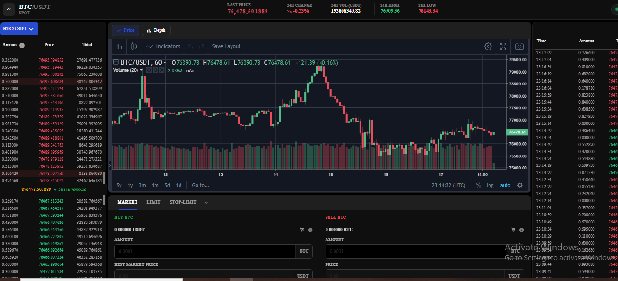
The client-facing environment should give traders a clear view of their OTC activity without requiring them to navigate unrelated exchange functions. The interface can bring together relevant balances, trading information, executed transactions, and OTC activity within the branded exchange environment.
Users can access relevant information such as:
- Supported asset and trading information
- Current balances
- OTC trade activity
- Open or pending transactions where applicable
- Completed trade history
- Transaction details
- Relevant account and verification information
Admin & OTC Desk Management
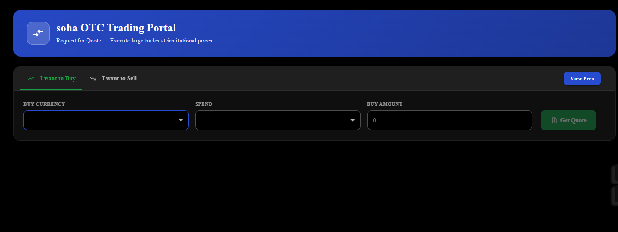
An OTC desk needs more than a client trading interface. Operators require visibility into users, transactions, assets, liquidity, and trading activity from the administrative side.
HashCash's exchange architecture includes an admin console with user management, transaction management, wallet management, reporting, liquidity management, risk management, access controls, and an in-house trading desk among its documented capabilities.
Administrative capabilities include:
- User Management — Manage exchange users and their account information.
- Transaction Management — Review and manage transaction activity.
- Liquidity Management — Manage configured liquidity connections.
- Wallet Management — Monitor and manage exchange wallet operations.
- Reporting — Access transaction and account reporting.
- Risk Management — Apply configured operational risk controls.
- Access Control — Manage administrative permissions across the platform.
- Trading Desk Operations — Support an operator-side trading desk environment where configured.
Security, KYC & Transaction Controls
High-value trading requires appropriate controls around user access, verification, asset management, and transaction activity. HashCash's exchange infrastructure includes two-factor authentication, wallet security, withdrawal protection, AML management, multi-tier KYC handling, IP tracking, DDoS/ransomware protection, encryption support, session management, and API-key permissions.
For the OTC environment, these controls can support the wider operational framework around:
HashCash also documents geography-specific KYC/verification based on applicable regulatory requirements.
Why HashCash for a White Label OTC Crypto Trading Platform?
Launch OTC Trading as Part of Your Own Exchange
HashCash's OTC capability can be positioned as a trading module within a broader exchange infrastructure, giving businesses the ability to offer negotiated digital-asset trading alongside the systems required to operate the exchange.