Web3 Wallet Solution
Launch a branded Web3 wallet that gives users a structured way to hold digital assets, connect with supported blockchain applications and initiate on-chain transactions.HashCash's Web3 wallet solution can be configured around your supported assets, wallet model, blockchain environment and user workflows.
A Web3 Wallet Built for More Than Asset Storage
A Web3 wallet is no longer just a place to display token balances. It can serve as the interface between users, blockchain networks, decentralized applications and digital-asset services. The product experience therefore needs to make the path from wallet connection to transaction authorization understandable while keeping the underlying wallet and security architecture clearly defined.
HashCash positions wallet infrastructure as part of a broader digital-asset environment. Depending on the selected architecture, a Web3 wallet can sit alongside exchange services, wallet infrastructure, liquidity, transaction processing, smart contracts and other platform components.
Your Branded Gateway to Web3
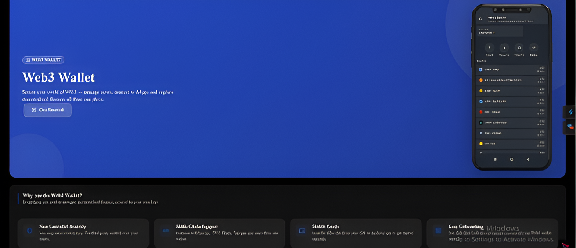
- Give users a branded interface for viewing and managing supported digital assets.
- Connect the wallet to supported blockchain networks and compatible decentralized applications.
- Enable supported send, receive, transfer and on-chain transaction workflows.
- Support token swaps or other configured Web3 functions where the deployment includes them.
- Connect wallet activity with a broader exchange or digital-asset platform where required.
Core Web3 Wallet Capabilities
How the HashCash Web3 Wallet Works
User
Web3 Wallet
Supported dApp / Action
Transaction Review
Authorize / Sign
Blockchain
Status & History
- User — Opens the branded wallet and selects an asset or supported Web3 action.
- Web3 Wallet — Displays the relevant asset, address, balance and available action.
- Supported Action — Connects the wallet to a compatible decentralized application, swap or other configured function.
- Transaction Review — Presents the transaction details and applicable network fee before authorization.
- Authorize / Sign — The wallet applies the configured signing or authorization mechanism.
- Blockchain — The transaction is submitted to the supported network for processing and confirmation.
- Status & History — The wallet or connected platform reflects transaction status and relevant history.
From Exchange to Web3
For businesses operating both exchange and Web3 services, the wallet can become the transition point between centralized account activity and blockchain-native interactions. HashCash's exchange architecture documents wallet balances, deposits, withdrawals, transaction processing and blockchain confirmation tracking, while its DEX architecture documents wallet-connected transactions, smart-contract execution and on-chain settlement.
Exchange Account
Asset Transfer
Web3 Wallet
dApp / Swap
On-Chain Transaction
Confirmation
Connect Users to Supported Web3 Applications
A decentralized wallet platform becomes useful when it can connect users to the applications they actually need. HashCash's DEX architecture describes wallet connectivity as the entry point for viewing balances, selecting an action, reviewing transaction details, authorizing the transaction and tracking confirmation. The Web3 wallet page should use the same logic while keeping the wording specific to the configured wallet deployment.
Token Swaps Within the Wallet Experience
A Web3 wallet can become more than a storage interface when swap functionality is integrated. The Web3 wallet describes token swaps across supported networks and liquidity sources. HashCash's DEX architecture separately provides swap routing, liquidity infrastructure and transaction execution. It also describes swaps as a configurable capability and avoids promising a fixed number of networks, tokens, prices or slippage outcomes.
Wallet Security Is an Architecture, Not a Badge
Wallet security depends on how assets, credentials, transaction signing, access controls and infrastructure are designed. HashCash's exchange wallet architecture provides encrypted hot wallets, multi-signature cold wallets, private-key safeguarding, transaction controls and balance monitoring. Its DEX material also distinguishes wallet authorization, administrative access and smart-contract security as separate parts of the security surface.
Multi-Chain and Asset Support
Web3 wallet products often span multiple blockchain environments, but chain support should be described carefully. HashCash's wallet infrastructure documents multi-asset operations and blockchain connectivity, while the supplied Web3 wallet reference demonstrates a broad multi-network wallet experience. It states that supported assets and networks are configurable or deployment-dependent unless a current product specification provides a fixed list.
Supported assets
Configure the digital assets available within the wallet.
Network support
Define the blockchain networks supported by the deployment.
Address management
Organize wallet addresses according to the selected architecture.
Transaction handling
Apply network-specific transaction and confirmation behavior.
Asset expansion
Add supported assets or networks as technical and business requirements evolve.
Web3 Wallet Software for Different Business Models
| Business model | Wallet role |
|---|---|
| Crypto Exchanges | Extend a centralized exchange with a wallet-led Web3 layer for supported on-chain activities. |
| DeFi Platforms | Give users a wallet entry point for supported decentralized applications, swaps and blockchain transactions. |
| Fintech & Digital-Asset Businesses | Add branded wallet functionality without treating wallet infrastructure as a standalone product. |
| Token & Web3 Projects | Provide users with a branded way to hold, transfer and interact with supported token ecosystems. |
| Investment Platforms | Connect wallet functionality with digital-asset portfolios, transactions and other investment workflows where required. |
A Decentralized Wallet Platform Within a Larger Stack
A wallet should not be presented as an isolated application when the business needs exchange, liquidity, asset management or reporting around it. HashCash's wider architecture separates these functions while allowing them to connect around the digital-asset workflow.
White Label Crypto Web3 Wallet
A white label crypto wallet allows a business to bring wallet functionality into its own branded product experience rather than presenting a third-party consumer wallet as the primary interface. HashCash can position the Web3 wallet around the business's supported assets, user journeys, integrations and broader digital-asset services, with exact functionality determined during technical scoping.