White Label Crypto Futures Exchange
Launch a branded crypto futures trading platform for users who want to trade digital-asset contracts with structured position, margin, leverage and risk-management workflows.What Is Crypto Futures Trading?
HashCash’s futures allow traders to take a position on the future price movement of a digital asset through a contract rather than buying or selling the underlying asset directly. A trader can take a long position when expecting the contract price to rise or a short position when expecting it to fall.
For an exchange operator, futures trading requires more than a conventional spot trading screen. The platform must coordinate contracts, orders, positions, margin, leverage, market pricing, risk controls, liquidation and settlement as part of one trading environment.
Futures Trading Platform Complete Workflow
HashCash’s futures infrastructure can be structured around the complete lifecycle of a futures trade, from selecting a contract and placing an order to managing an open position and recording its final outcome.
Select Contract
Choose the available futures market and contract.
Fund Margin
Allocate the required collateral to the futures account.
Place Order
Select the supported order side, type and contract quantity.
Open Position
The executed order creates or changes a futures position.
Manage Position
Monitor entry price, current price, margin, P&L and position status.
Risk & Liquidation
Apply configured margin and risk controls when a position approaches defined limits.
Close & Settle
Close the position and record the resulting transaction and settlement information.
Contracts, Long & Short Positions
A futures platform needs a clear contract structure so users understand what they are trading and how their positions behave. HashCash’s trading interface can present the selected contract, market price, position direction, contract quantity and other configured trading information before an order is submitted. Users can take either a long or short position. A long position seeks to benefit from an increase in the contract price, while a short position seeks to benefit from a decrease.
Where the deployment supports multiple contract types, the available markets and contract parameters should be configured according to the exchange’s product and operating requirements.
Margin & Leverage
Margin is the collateral allocated to support a futures position. Leverage allows a trader to control a position larger than the amount of margin committed, which also increases the sensitivity of the position to market movements.
HashCash’s futures platform therefore gives clear visibility into available margin, position margin and relevant leverage settings. These controls are connected to the exchange’s risk framework rather than treated as isolated trading-interface elements.
Futures Trading Interface
The futures trading terminal should give traders the information and controls required to analyse a market, submit orders and manage open positions without leaving the trading environment.
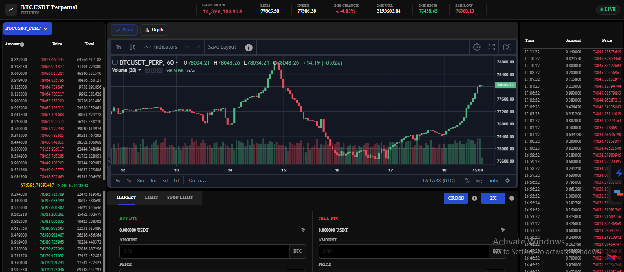
- Market ChartsVisualize price movement for the selected futures market.
- Order BookReview available bids and ask where an order-book market is used.
- Order EntrySelect the order side, type, quantity and other supported parameters.
- Position PanelMonitor open positions, entry information, P&L and margin context.
- Order & Trade HistoryReview submitted orders and completed trading activity.
- Margin & LeverageView and manage the applicable margin and leverage settings.
- Market InformationDisplay the crypto exchange market data relevant to the selected market.
Risk Controls & Liquidation
Risk management is a core part of futures infrastructure because leveraged positions can move rapidly as market prices change. HashCash’s platform monitors margin and position conditions and applies the configured risk rules when a position reaches defined thresholds.
Liquidation is the process of closing or reducing a position when the required margin is no longer maintained under the platform’s configured rules. The exact trigger, liquidation mechanism and risk parameters depend on the futures product and exchange configuration.
Key Risk Management Functions
- Margin Monitoring — Track the margin supporting active futures positions.
- Position Risk Controls — Monitor position conditions against configured risk parameters.
- Leverage Parameters — Apply the leverage settings available for each supported futures market.
- Liquidation Rules — Apply the configured rules when required margin conditions are no longer maintained.
- Position Status Monitoring — Track the current state of open and managed positions.
- Risk & Transaction Records — Maintain relevant records of position and transaction activity for operational visibility.
Liquidity & Market Infrastructure
Futures trading depends on market infrastructure capable of supporting pricing, order execution and available crypto exchange liquidity. HashCash’s broader exchange infrastructure includes liquidity integration, matching-engine technology and exchange connectivity that can support the wider trading environment.
For a futures deployment, the available markets, liquidity sources and execution model should be defined around the exchange’s configured futures products.
Wallet, Margin Account & Asset Flow
Futures trading needs an account and balance layer that is distinct from the user’s broader asset-management experience. Traders need to see the collateral available for futures activity, understand the margin committed to positions and review the resulting account activity.
The futures environment can operate alongside the exchange’s wallet infrastructure, connecting deposits, supported assets, account balances and transaction records.
API & Exchange Integration
Futures trading can operate as part of a broader exchange environment, with APIs connecting the trading application to supported exchange services and external applications. Controlled API access and authentication help operators manage which functions connected applications can access.
KYC, User Access & Administrative Controls
Futures trading sits within the exchange’s wider user and compliance environment. User onboarding, identity verification, account permissions and administrative controls should remain connected to the futures product while being managed through the exchange’s operational layer.
Security for Futures Trading Infrastructure
A futures platform combines trading accounts, market connectivity, APIs, user access and financial transactions, making security an infrastructure-wide requirement. HashCash’s broader exchange architecture includes multiple security layers covering wallets, applications, databases, servers and network protection.
Futures vs Spot Trading
Futures and Spot serve different trading workflows. Spot trading on a white label spot trading platform involves buying or selling the underlying digital asset, while futures trading uses contracts that create positions tied to the price of an asset. Futures also introduce margin, leverage and liquidation mechanics that are not part of a basic spot trade.
| Trading Function | Spot Trading | Futures Trading |
|---|---|---|
| Asset Exposure | Buy / sell the underlying asset | Trade a contract linked to an asset price |
| Position Direction | Typically buy / sell the asset | Long or short |
| Margin | Not a core requirement for standard spot trading | Core part of leveraged futures trading |
| Leverage | Not inherent to standard spot trading | May be configured for futures markets |
| Liquidation | Not a standard spot mechanism | Can apply when margin requirements are not maintained |
| Trading Infrastructure | Spot orders and execution | Contracts, positions, margin, risk and settlement |
How Futures Fits Into the Exchange
Futures should operate as a dedicated trading layer within the wider exchange architecture. The user-facing futures terminal connects to contract and market data, order execution, liquidity, account balances and transaction records, while KYC, APIs, security and administration support the platform around it.