White Label Crypto Copy Trading Platform
Launch a branded crypto copy trading platform that lets users discover trading strategies, follow traders, and participate in supported copy-trading workflows through a structured marketplace.HashCash provides the infrastructure for connecting trader strategies, follower accounts, API access, automated bots and exchange trading functions within a configurable platform.
What Is Crypto Copy Trading?
Crypto copy trading allows users to follow the trading activity of selected traders or strategies and replicate supported trades through their own connected exchange accounts. Instead of making every trading decision manually, followers can choose a trader or strategy and participate through the copy-trading workflow configured by the platform.
HashCash provides the infrastructure to build this functionality into a branded crypto exchange, connecting trader and follower accounts with strategy discovery, API connectivity, trading bots, supported markets, and platform administration. Traders can publish eligible strategies or bots, while followers can browse available options and manage the traders or strategies they choose to follow.
As a dedicated exchange module, HashCash’s copy-trading solution can operate alongside Spot, Futures, and Options, while connecting with the exchange’s broader trading, liquidity, wallet, API, security, KYC, reporting, and administrative infrastructure.
How the Copy Trading Workflow Works
Connect the trading account
The trader or follower adds the relevant API connection and selects the supported exchange and market.
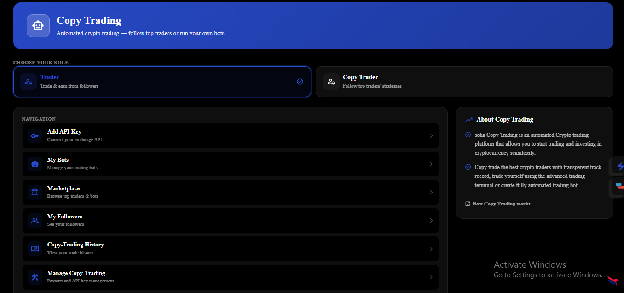
Choose the role
The user selects the applicable role, such as Trader or Copy Trader.
Publish a strategy or bot
A trader can make an eligible API strategy or trading bot available through the marketplace.
Discover strategies
A follower browses available traders and bots and uses available filters to narrow the marketplace.
Select and follow
The follower chooses a trader API strategy or bot to follow.
Monitor activity
The user can review whom they follow, while traders can review followers and manage published strategies or bots.
Trader & Copy Trader Roles
A crypto copy-trading platform serves two distinct user roles: Traders, who provide strategies, and Copy Traders, who follow those strategies. Keeping these roles separate allows HashCash to provide dedicated workflows for strategy creation, discovery, publishing, following, and relationship management.
A Trader can connect a supported API, configure an eligible trading strategy or bot, and publish it to the copy-trading marketplace. Once published, the trader can manage follower relationships and monitor the visibility and activity associated with their strategies.
A Copy Trader uses the marketplace to discover available traders and bots, review the information provided for each strategy, select a strategy to follow, and manage their active copy-trading relationships through their account.
Trader
Connect API
Configure Strategy/Bot
Publish
Manage Followers
Review Payments / Visibility
Copy Trader
Connect API
Browse Marketplace
Filter Traders/Bots
Follow
Manage Followed Strategies
Copy Trade Marketplace
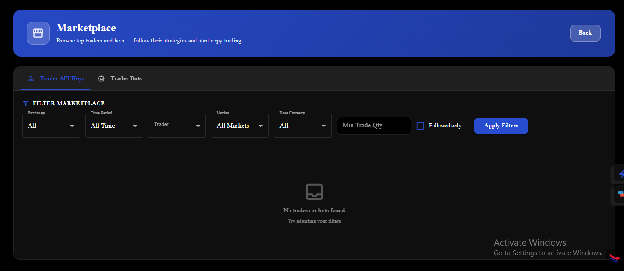
The copy trade marketplace is the discovery layer of the platform, connecting traders who publish eligible strategies or trading bots with users looking for strategies to follow. HashCash’s copy-trading infrastructure can provide a structured marketplace where users can browse available trader API strategies and bots, review the information associated with each listing, and use available filters to find relevant options.
The marketplace can organize listings around practical trading information such as exchange, time, trader, market type, base currency, and minimum trade quantity. Trader listings can also display information such as the trader name, follower count, market, and minimum capital requirement, giving potential followers useful context before they choose a strategy.
Trader Profiles, Followers & Strategy Visibility
Trader profiles give potential followers a clear view of the basic information associated with a published strategy before they decide to follow it. HashCash’s copy-trading marketplace can display details such as the trader name, follower count, supported market, and minimum capital requirement, helping users understand the basic parameters of a strategy within the marketplace.
For traders, the My Followers section provides visibility into their active follower relationships, including the number of users following the trader and the number of users following their published trading bots. This connects strategy publication with ongoing follower management and gives strategy providers a dedicated view of their audience within the platform.
API Connectivity & Access Controls
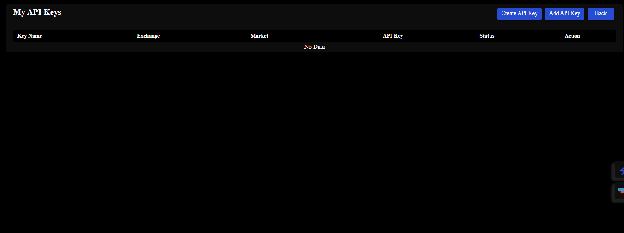
API connectivity is a core component of the copy-trading workflow, allowing users to connect supported exchange accounts to the platform. Users can create an API connection by selecting the exchange, choosing the relevant market, assigning a name to the API key, entering the required API credentials, and submitting the connection. The available market options include Spot, Futures, and Options.
HashCash’s API management workflow also provides controls for managing connected API keys. Users can create, edit, and delete API keys, while API permissions can be configured during key creation. Where supported, trusted IP restrictions can also be applied to limit where an API connection can be used. Two-factor authentication (2FA) is required during the documented API-key creation workflow, adding an additional authentication step when establishing a new API connection.
Trading Bots & Automated Strategies
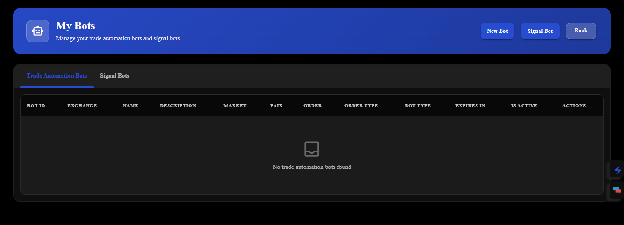
The copy-trading environment can also support automated trading bots, giving traders an additional way to create and publish strategies for followers. HashCash’s documented bot allows a trader to select an exchange and market, name and describe the bot, choose the relevant API key and trading pair, and configure the supported trading and bot parameters.
The available bot types include Single Entry, Take Profit, and Dollar Cost Average (DCA), with configurable values and expiry settings within the supported workflow. After creation, traders can activate their bots and manage them through the platform, including pausing, editing, or deleting a bot when required.
This gives the copy-trading marketplace two complementary sources of strategies: Trader API strategies and Automated trading bots. Followers can browse and search these options separately, allowing the marketplace to support both trader-led and automated strategy discovery.
Follower Management
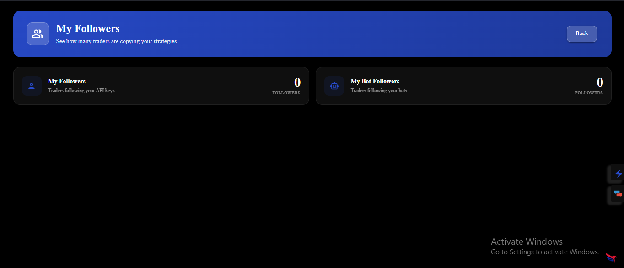
Once a trader publishes a strategy or bot, the My Followers section gives the trader visibility into the users who have chosen to follow or copy their trading activity. It provides a dedicated view of the trader’s follower base and the relationships created through the copy-trading marketplace.
My Followers Features
- Follower Count — View the number of investors currently following the trader.
- Follower Usernames — See the usernames associated with the trader’s followers.
- Investment Information — Where available, view information related to the amounts invested by individual followers.
- Follower Performance Details — Where supported by the interface, access additional information about follower performance.
Security for Copy Trading
Copy trading involves API connections between user accounts and the trading platform, making authentication and access controls an important part of the overall architecture. HashCash’s documented workflow includes two-factor authentication for API-key creation, configurable API permissions, and trusted-IP restrictions where supported. Key security controls supporting the copy-trading environment include:
- Two-Factor Authentication — Adds an additional authentication step when creating API connections.
- API Permissions — Allows supported API access to be configured according to the functions required.
- Trusted IP Restrictions — Helps restrict API access to approved IP addresses where supported.
- User & Access Controls — Connects copy trading with the exchange’s broader authentication and permission-management framework.
- Transaction & Activity Monitoring — Provides operational visibility across connected trading activity.
Administrative & Operational Controls
Copy trading needs to operate within the exchange’s existing administrative environment, giving operators visibility across users, transactions, connected APIs, assets, and platform activity. HashCash’s exchange infrastructure provides administrative capabilities for user management, transaction management, liquidity, wallets, reporting, API management, exchange assets, access control, risk management, and commission management.
For the copy-trading module, these controls support the operational management of user access, API connections, published strategies and bots, transactions, and reporting without creating a separate administrative system.
Key Administrative Functions
- User Management — Manage users and their access to the exchange environment.
- API Management — Oversee API connections and related access controls.
- Strategy & Bot Oversight — Manage the platform environment in which copy-trading strategies and bots are published.
- Transaction & Reporting — Monitor relevant activity and access operational reports.
- Access & Risk Controls — Apply the exchange’s broader permission and risk-management framework.
Copy Trading vs Social Trading
| Area | Copy Trading | Social Trading |
|---|---|---|
| Primary purpose | Replicate supported trading activity from selected traders or bots. | Provide a broader environment for discovering, following and engaging with trading strategies. |
| Core workflow | Select strategy → follow → copy supported activity → monitor relationship. | Discover profiles/content → follow traders → interact with strategy information and community features. |
| Core interface | Marketplace, API strategies, bots, follower management. | Trader profiles, social discovery, feeds or community features where implemented. |
| Execution role | Directly connected to the trade-copying workflow. | May or may not include automated execution depending on the product. |
Copy Trading Architecture
Trader or Trading Bot
API Connection & Strategy Configuration
Trader connects the supported exchange account and configures the strategy or bot.
Copy Trade Marketplace
Published traders and bots become available for discovery by potential followers.
Follower Selects a Trader or Bot
The follower reviews the available options and chooses a strategy to follow.
Copy Trading & Trade Replication
Supported trading activity is processed through the configured copy-trading workflow.
Supported Trading Market
Order & Execution Infrastructure
The copied trading activity connects with the exchange's underlying order and execution environment.
Follower Account, Wallet & Trade Record
The resulting account activity, asset balances and transaction records remain connected to the follower's exchange account.