Launch a Branded Crypto Loans Platform
Build a digital-asset lending environment where users can secure loans against eligible crypto assets, access configurable borrowing terms and manage collateral, interest and repayment through a structured loan workflow.Digital-Asset Loans Built Into Your Platform
A white label crypto loans platform gives businesses the infrastructure to offer branded crypto-backed lending without developing the complete lending system from the ground up. It connects the borrowing experience with the core functions required to manage collateral, loan terms, interest, repayments and ongoing loan activity.
HashCash's crypto loans platform can be incorporated into a broader digital-asset or exchange environment, allowing businesses to offer lending under their own brand and user experience. Eligible digital assets can be used as collateral, while loan parameters and servicing workflows can be configured around the business's operating model.
The platform can work alongside accounts, wallets, transactions, administration and reporting systems, creating a connected environment for managing loans from origination through repayment and collateral release. This makes crypto lending an integrated financial service within an existing digital-asset platform rather than a separate borrowing application.
What Can a Crypto Loans Platform Do?
How a Crypto-Backed Loan Works
Borrower Initiates a Loan
The user selects the available loan product, borrowing asset and required amount through the lending interface.
Eligible Collateral Is Provided
The borrower commits an eligible digital asset as collateral according to configured lending rules.
Loan-to-Value Is Evaluated
The system evaluates the requested borrowing amount against applicable collateral value and configured LTV parameters.
Loan Is Created and Funds Are Disbursed
Once applicable conditions are satisfied, the loan position is created and the configured loan asset is made available through the user's account or wallet workflow.
Loan Position Is Monitored
The platform tracks the outstanding position, collateral value, interest and relevant risk parameters.
Repayment and Collateral Release
The borrower repays the outstanding obligation according to configured terms. Once applicable conditions are met, the collateral-release workflow can be completed.
Loan-to-Value (LTV) and Risk Controls
Crypto Loans Software Connected to Your Exchange
A lending module becomes significantly more useful when connected to the systems that already manage digital-asset accounts.
- Wallet Infrastructure — Collateral and loan assets need to connect with the platform's wallet and balance environment.
- User & Account Management — Borrowing activity needs to remain associated with the correct user, account and verification status.
- Liquidity Infrastructure — Where the lending model requires external liquidity or market connectivity, the lending environment can be considered alongside the platform's liquidity architecture.
- Transaction Management — Loan-related asset movements need appropriate transaction visibility and operational controls.
- Administration — Operators need visibility into loan positions, users, assets, transactions and configured lending parameters.
- Reporting — Loan activity can be incorporated into the broader reporting environment so operators can review relevant financial and transaction information.
Operator Control Across the Lending Lifecycle
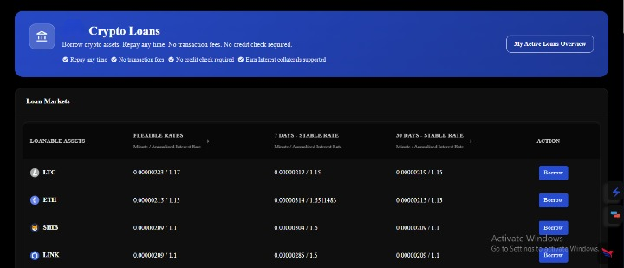
Operator Controls
- Loan ConfigurationDefine supported loan products, assets, parameters and applicable lending rules.
- Collateral ManagementMonitor collateral associated with active loan positions.
- User & Account OversightReview borrower accounts and relevant verification information within the broader exchange environment.
- Loan Position MonitoringTrack active loans, outstanding balances, interest and applicable risk indicators.
- Transaction ManagementReview lending-related deposits, transfers, repayments and other configured transaction activity.
- Risk ManagementApply the risk parameters and thresholds established for the lending model.
- ReportingMaintain operational visibility into lending activity and relevant account information.
- Access ControlsSeparate administrative responsibilities according to the permissions and access model configured for the platform.
Lending Doesn't Replace the Exchange Infrastructure Around It
A crypto loans platform should not be viewed as a standalone feature.
The lending workflow depends on several surrounding systems. A borrower must have an account. Collateral must be associated with an asset and wallet structure. Loan funds need to move through supported transaction infrastructure. User verification may be required according to the business model and applicable requirements. Risk parameters need to be monitored. Operators need administrative visibility. Transactions and loan activity need reporting.
This is why HashCash approaches crypto lending as part of a broader exchange and digital-asset technology stack rather than as an isolated borrowing interface.
Connect Crypto Lending With Your Existing Exchange
Crypto loans can become another financial service within a broader exchange environment. Businesses can combine lending with existing trading and digital-asset capabilities according to their platform model.
HashCash provides a branded exchange that has:
- Spot trading for conventional digital-asset markets.
- OTC trading for negotiated transactions.
- Crypto Convert for simplified asset conversion.
- Futures and options for configured derivatives markets.
- Copy trading for strategy-based trading experiences.
- Crypto loans for collateralized borrowing.
The advantage is having the infrastructure required for those services connected through a common account, wallet, transaction and administrative environment.
Configurable Crypto Lending
Businesses can integrate a white label crypto lending service into their existing exchange or digital-asset platform instead of building a separate lending system. HashCash allows the lending experience to be configured around the business's brand, supported assets, lending workflows and operational requirements. The infrastructure can connect lending with relevant account, wallet, transaction and exchange systems.
The lending model, risk parameters, integrations and operational responsibilities can be defined during implementation.
Security, Compliance and Lending Responsibilities
Digital-asset lending combines financial exposure with digital-asset custody and transaction activity. Security therefore needs to be considered across more than the loan interface itself.
HashCash's broader exchange infrastructure includes wallet controls, administrative access controls, transaction management, verification workflows and security-related infrastructure. The lending implementation can be designed to operate within these broader controls. Compliance requirements depend on the business model, lending structure, assets offered, customer base and jurisdictions in which the service operates.
Deploying lending software does not by itself make a business legally authorized to provide lending services. The appropriate legal, regulatory, KYC/AML, custody and lending requirements should be established for the intended operating model before launch.