Crypto Exchange Reporting & Analytics
Turn exchange activity into structured reports, dashboards and operational insight.HashCash's crypto exchange reporting software helps exchange operators organize and analyze trading, transaction, user, wallet and market activity from the wider exchange environment.
Bring Exchange Data Into One Reporting Environment
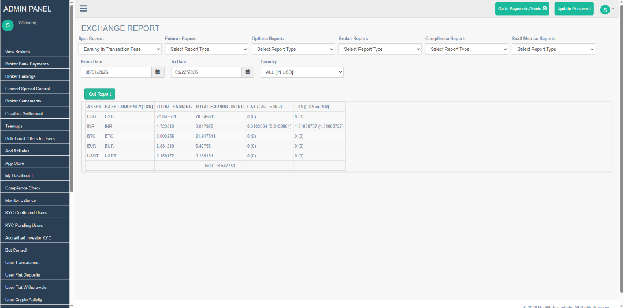
A cryptocurrency exchange generates data continuously. Orders are placed and executed, assets move through wallets, users trade across markets, deposits and withdrawals are recorded, and market activity changes over time. Without a structured reporting layer, these events can be difficult to compare and interpret across teams.
HashCash's reporting and analytics capability is designed to organize this activity into reports and visual views that operators can use for ongoing exchange oversight. The reporting layer can work with transaction records, trading activity, user information, wallet activity and other exchange data exposed by the configured platform.
Reporting Built Around the Exchange, Not Just the Trade
Crypto exchange analytics becomes more useful when it goes beyond individual trade history. Operators may need to understand trading activity alongside transaction flows, user activity, asset movements and market performance.
- Trading reports — Review orders, executions and relevant trading-performance information where supported.
- Transaction reports — Analyze transaction records alongside wider exchange activity.
- User reports — Organize user-specific or user-level exchange activity for operational review.
- Wallet and asset reporting — Present relevant wallet, balance and asset activity within the reporting environment.
- Market and exchange activity — Review activity across configured markets and assets.
- Operational reports — Provide structured information for administration, investigation and internal review.
The exact report fields and available data depend on the exchange modules, assets, markets and integrations included in the deployment.
An Exchange Reporting Dashboard for Multiple Operational Views
An exchange reporting dashboard brings important platform activity into organized reporting views, helping different teams monitor the information relevant to their work.
HashCash connects the reporting layer with the underlying exchange systems, allowing relevant trading, transaction, wallet, user and operational data to be organized into reporting views without treating reporting as a separate system.
Filter, Compare and Drill Into Exchange Activity
Reporting becomes more useful when operators can move from an overall view to the records behind it. HashCash's current reporting material references filtering, pivot tables, drill-downs and web-based dashboards, supporting a workflow in which users can examine data at different levels.
Start with the exchange-level view to identify the activity or metric requiring attention.
Narrow the dataset using available filters such as time period, asset, market, user or report type where supported.
Drill into the underlying activity to understand the records contributing to the result.
Generate or review the appropriate report for operational analysis.
Export supported reports when the data needs to be reviewed outside the exchange environment.
Reports Across Trading, Transactions and Users
Exchange reporting should connect different operational perspectives without confusing their purposes. Trading reports describe market and execution activity. Transaction reports describe asset movement and transaction records. User reports organize activity around an account or user context.
HashCash's exchange data sheet provides user reports, exchange reports and coin reports within the admin console, while the client environment includes transaction history and reports. This structure allows reporting to support both operator-level and user-level review.
Connect Reporting With Wallets, Liquidity and Market Data
Reporting is only as useful as the exchange data behind it. HashCash's current exchange architecture places Reporting & Analytics alongside wallet infrastructure, liquidity, matching engine, spot trading, market data, KYC & AML, API and administration.
The relationship matters because exchange performance is rarely explained by one dataset. Trading activity can be reviewed alongside transaction activity; wallet activity can be considered alongside asset and user information; market activity can be examined alongside liquidity and trading operations.
These components remain functionally distinct. Reporting presents and analyzes available exchange data; it does not replace the matching engine, wallet infrastructure, liquidity layer, KYC/AML controls or administrative systems.
Reporting for Different Exchange Operating Models
Reporting requirements depend on the exchange model and enabled products. A spot exchange may emphasize trading volume, orders, executions, transaction history and asset activity. A P2P exchange can require reporting around buyer-seller activity and associated transactions. OTC workflows can require visibility into negotiated trades, settlement and account activity.
The same principle applies as an exchange expands into other markets or financial products: reporting should reflect the modules actually deployed rather than presenting a fixed list of analytics that every exchange must use.
Reporting That Supports Exchange Operations
Operations
Review exchange activity and investigate records requiring attention.
Trading
Examine orders, executions and relevant performance information.
Finance
Review transaction, trading and other available financial activity.
Support
Locate relevant user, transaction or account records for operational queries.
Management
Use summarized dashboards and reports to understand exchange activity over selected periods.
Compliance
Provide relevant records to authorized teams; specialist compliance monitoring remains a separate function where required.
Why HashCash for Crypto Exchange Reporting & Analytics?
HashCash positions reporting within the broader exchange infrastructure. The current product architecture connects reporting with transaction management, wallet infrastructure, trading, liquidity, KYC/AML, APIs and administrative controls.