Crypto Interest & Earn Platform
Launch a branded crypto earning service where users can allocate supported digital assets to configured interest, staking or reward-based products.Build a Structured Crypto Earn Experience
Crypto earn products allow digital-asset holders to put supported assets into a configured earning product rather than simply keeping them idle. Depending on the underlying model, returns may come from staking rewards, lending activity, protocol incentives or another defined source of yield.
That distinction matters. A staking product and an interest-bearing lending product can both appear within an earn interface, but their underlying mechanics, risks, lock periods and reward calculations are different. HashCash can position the platform around the configured earning model rather than presenting one mechanism as universal.
Core Product Layers
| Layer | What It Manages |
|---|---|
| Supported Assets | Digital assets available for earning products |
| Earn Products | Configured interest, staking or reward products |
| Terms | Flexible or defined earning periods |
| Rewards | Accrued or distributed earning amounts |
| Wallets | Movement between available and earning balances |
| Redemption | Withdrawal or redemption according to product rules |
| History | Earn activity, balances and reward records |
| Administration | Product, asset, user and platform controls |
Support Different Ways to Earn Crypto Interest
A white label crypto earn platform can support more than one earning structure. The appropriate model depends on the assets, underlying activity, funding source, reward mechanism and business rules.
Design the Earn Product Around Supported Assets
A Interest & Earn Platform is only as useful as the assets and products available to its users. Operators need to define which cryptocurrencies can participate, which earning products are available for each asset, and what terms apply.
Asset-Level Configuration
Eligible assets
Define the digital assets available for each earn product.
Product availability
Associate supported assets with the relevant earning mechanism.
Minimum or maximum amounts
Apply product-specific limits where configured.
Term structure
Define flexible or locked periods where supported.
Reward model
Configure the applicable interest or reward calculation.
Redemption rules
Define how and when users can redeem allocated assets.
Asset balances
Keep available and earning balances visible to the user.
HashCash's exchange architecture sets multi-asset wallet and asset management, with cryptocurrency support configurable according to deployment requirements. The earn layer can therefore be positioned as an additional product environment around the supported asset infrastructure.
Make Interest and Rewards Easy to Understand
Users need to know what they are earning, how the earning amount is calculated and when they can access their assets. A clear earn interface should separate the displayed rate or reward information from the actual underlying mechanism.
| User Sees | Platform Manages |
|---|---|
| Available asset | Supported asset and product eligibility |
| Earning rate / reward | Configured product calculation |
| Allocated amount | Amount moved into the earning product |
| Earned amount | Accrued or distributed rewards |
| Term | Flexible or defined lock period |
| Redemption status | Applicable withdrawal or redemption rule |
| Earn history | Historical activity and reward records |
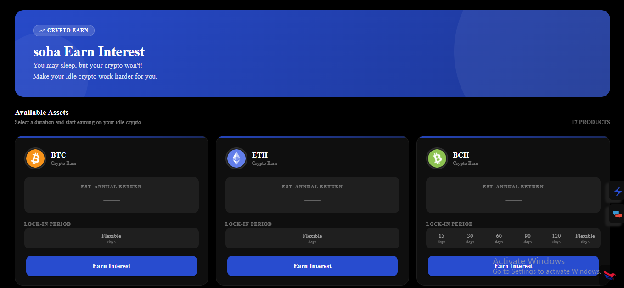
From Asset Allocation to Reward Redemption
The earn journey should be simple at the user interface while the underlying platform manages the accounting and product rules.
Select Asset
Choose Earn Product
Review Terms
Allocate Assets
Earn Rewards
View Balance
Redeem / Reinvest
Connect Earn Products With Wallet Infrastructure
The earning experience is closely connected to the user's asset balances. Assets may move from an available balance into an earn balance, remain committed for a defined period, accrue rewards, and then return to an available balance when redemption is permitted.
HashCash's wallet infrastructure supports digital-asset balances, deposits, withdrawals, transaction processing, confirmation tracking and asset management. This provides a relevant supporting layer for an earn product deployed within a wider exchange environment.
Add Earn Products to an Existing Crypto Exchange
For an exchange operator, an earn product can become an additional user-facing service alongside trading, wallets, asset management, liquidity and reporting. This creates a broader digital-asset product environment without requiring the earning experience to exist as an unrelated platform.
Connected Exchange Layers
Build a Crypto Yield Platform Around the Underlying Mechanism
The term “yield” can describe several different sources of return. A crypto yield platform should make the underlying mechanism understandable instead of presenting every return as staking or interest.
| Yield Model | General Mechanism |
|---|---|
| Staking | Rewards associated with committing assets to a supported blockchain staking mechanism. |
| Lending | Returns generated through an underlying lending activity. |
| Liquidity / DeFi | Returns associated with providing assets to supported liquidity or decentralized protocols. |
| Structured Earn | Returns determined by the configured product strategy and terms. |
The available mechanisms, supported assets, reward rates and associated risks depend on the specific product architecture. Clear product disclosures should accompany each earning option.
Give Users a Clear Earn Dashboard
The user dashboard should make the relationship between assets, products and rewards easy to understand. It should distinguish available balances from allocated balances and show the status of earning positions.
| Dashboard Area | Purpose |
|---|---|
| Available Balance | Show assets available for allocation or withdrawal. |
| Earn Balance | Show assets currently allocated to earning products. |
| Active Products | Display current earning positions. |
| Estimated / Accrued Rewards | Show applicable rewards according to product rules. |
| Term & Status | Show flexible, locked or staking status. |
| Redemption | Provide the configured redemption action. |
| Earn History | Show past allocations, rewards and redemptions. |
Centralized Controls for Earn Product Operators
A commercial earn platform requires an operator layer behind the user dashboard. Product teams need to manage available assets, earning products, user activity, balances and reward records.
| Control Area | Management Focus |
|---|---|
| Product Management | Earn products and terms |
| Asset Management | Supported earning assets |
| Reward Management | Interest and reward rules |
| User Management | Customer earning accounts |
| Balance Management | Available and earning balances |
| Redemption Management | Withdrawals and redemption activity |
| Reporting | Earn and transaction records |
| Access Control | Administrative permissions |
Monitor Earn Activity Through Reporting
As an earning product grows, operators need visibility into allocations, rewards, redemptions and user activity. Reporting can help separate active earning balances from completed or redeemed positions.
Useful Reporting Views
HashCash's broader portfolio and trade-reporting infrastructure documents web-based dashboards, reporting, P&L, positions, exposure and user-defined reporting capabilities. Exact earn-specific reports should be configured for the selected deployment.
Build Earn Products Into a Broader Digital-Asset Platform
An earn product becomes more useful when it operates alongside the other financial services a digital-asset business already provides. Trading, wallets, asset management, portfolio services, liquidity and reporting can form the surrounding environment.
Broader Product Connections
Trading
Provide a route between trading balances and eligible earn products.
Wallets
Manage asset balances and movement.
Portfolio Management
Track earning assets as part of wider holdings.
Liquidity
Support the broader exchange environment where required.
Loans
Offer lending and earning products as separate financial services.
Reporting
Give operators visibility across asset activity.
Launch a White Label Crypto Earn Experience
A white label crypto earn platform allows a business to present earning services under its own brand and within its own digital-asset product environment. The user experience, supported assets, earning products, terms and operator controls can be aligned with the business model.
Brand and Configure the Experience
- Branded earn dashboard
- Configured supported assets
- Flexible or locked earning products
- Interest, staking or reward-based mechanisms
- Product-specific terms
- Asset allocation and redemption workflows
- Earn history and reporting
- Operator-side controls
The exact customization scope depends on the selected earning mechanism, asset integrations and deployment requirements.
Why HashCash for a Crypto Interest Earn Platform?
HashCash's broader digital-asset architecture provides the surrounding infrastructure needed to position earning as part of a larger product ecosystem. The documented exchange stack includes wallets, asset management, liquidity, reporting, APIs, administration, KYC/verification and multiple exchange modules.